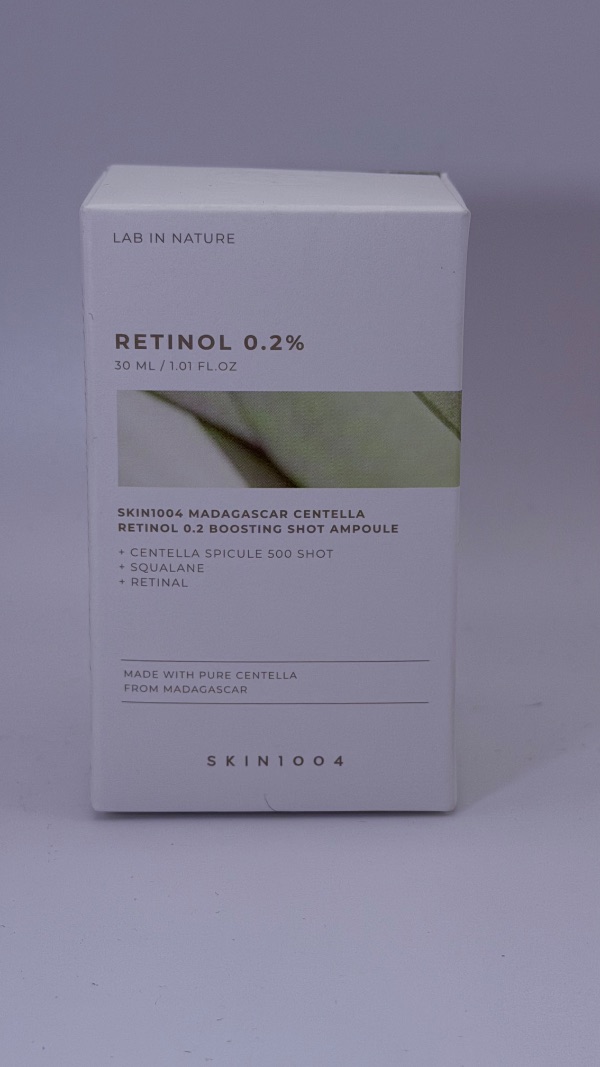
Retinoids have the strongest evidence base of anything in skincare. They are also the most confusing category on the shelf, because at least seven different compounds are sold under the same broad heading, at wildly different strengths, and the naming gives almost no clue which is which. Retinol and retinal differ by one letter and by a factor of several in potency. Tretinoin and tazarotene sound like variations on a theme and are not.
This guide takes each one in turn: what it is, how it works, how strong it actually is, and who it suits. If you have read our earlier piece on retinol versus retinal, this is the fuller picture.
The one idea that makes all of this make sense
Every retinoid works by the same final mechanism. It binds to retinoic acid receptors in the skin, which changes how skin cells behave — accelerating turnover, increasing collagen production, normalising the way cells shed inside the pore.
But only one form can bind those receptors directly: retinoic acid. Everything else has to be converted into it by enzymes in your skin first, and every conversion step loses some of the material.
retinyl ester → retinol → retinal → retinoic acid
That chain explains the entire hierarchy. The further left a compound sits, the more steps it must complete, the weaker its effect and the gentler it feels. The further right, the more direct, the more potent and the more irritating. Strength is not a marketing claim — it is a count of conversion steps.
Retinyl esters
What it is: retinol bonded to a fatty acid. Retinyl palmitate is the common one; you will also see retinyl acetate and retinyl propionate.
How it works: three conversion steps from retinoic acid — ester to retinol, retinol to retinal, retinal to retinoic acid. Each step is lossy, so very little of what you apply arrives as the active form.
Strength: the weakest retinoid sold. Frequently included at levels that allow a brand to put "retinol" on the front of the box without delivering a meaningful dose.
Who it suits: people with genuinely reactive skin who have failed with everything stronger, and anyone who wants the label more than the effect. If you are choosing a first retinoid and can tolerate slightly more, start one rung up instead — you will wait a very long time for results here.
Retinol
What it is: vitamin A in its alcohol form. The default over-the-counter retinoid and the most studied of the non-prescription options.
How it works: two conversion steps. Enough is lost along the way that concentration matters — a 1% retinol is doing considerably more than a 0.1%.
Strength: typically sold between 0.01% and 1%. Real, well-documented results on fine lines, texture and pigmentation, but expect to wait: twelve weeks is a fair assessment window, and six months is where the anti-ageing data becomes convincing.
Who it suits: beginners and most people indefinitely. If you have never used a retinoid, this is the sensible entry point. Start at 0.2–0.3%, twice a week, at night.
Retinal (retinaldehyde)
What it is: one step further along the chain than retinol. Written "retinal" or "retinaldehyde" — a single letter apart from retinol, which is why it is so often misread.
How it works: one conversion step to retinoic acid rather than two, so a greater proportion of what you apply becomes active. It also has mild antibacterial activity that retinol does not, which makes it interesting for acne-prone skin.
Strength: usually 0.05% to 0.1%. Meaningfully more potent than retinol at the same percentage, while remaining better tolerated than prescription options. K-beauty has embraced it heavily over the past few years.
Who it suits: anyone who has used retinol comfortably for a few months and wants more, without a prescription. Also a reasonable starting point for resilient skin that has tolerated acids well.
Granactive retinoid (hydroxypinacolone retinoate)
What it is: an ester of retinoic acid, usually sold under the trade name Granactive Retinoid. It appears increasingly in both Western and Korean formulas.
How it works: unusually, it is said to bind retinoic acid receptors directly without needing conversion, which is the basis of the claim that it delivers results with less irritation.
Strength: difficult to state honestly. It is normally sold as a percentage of a solution that is itself only 10% active, so "2% Granactive Retinoid" means roughly 0.2% of the actual compound. The independent evidence base is thinner than for retinol or retinal — this is a promising ingredient rather than a proven one.
Who it suits: people who cannot tolerate retinol and want to try something gentler. Treat the claims with more caution than you would for retinol, where the data is genuinely robust.
Adapalene
What it is: a synthetic third-generation retinoid, developed for acne rather than ageing. Sold as Differin among others.
How it works: binds receptors directly — no conversion needed — but selectively, targeting the receptor subtypes most involved in acne while engaging others less. That selectivity is why it is markedly less irritating than tretinoin despite comparable acne results. It is also far more stable in light and air than retinol.
Strength: 0.1% and 0.3%. Comparable to tretinoin for acne; less impressive for wrinkles, which is not what it was designed for.
Who it suits: anyone whose primary concern is acne rather than ageing. Note for UK readers: although adapalene is sold over the counter in the United States, all forms require a prescription in the UK. Your GP can prescribe it, and it is available through UK online pharmacy services after consultation.
Tretinoin (retinoic acid)
What it is: retinoic acid itself. Not a precursor to anything — this is the molecule every other retinoid is trying to become.
How it works: binds receptors immediately, with no conversion and no losses. It has the longest and deepest clinical record of any topical anti-ageing treatment, going back decades.
Strength: 0.025% to 0.1%. Substantially stronger than anything available without a prescription. The adjustment period — flaking, redness, tightness for two to six weeks — is real and is the main reason people abandon it.
Who it suits: people with established retinoid tolerance and a specific goal, under medical supervision. Prescription-only in the UK and the EU. Buying it unregulated online is a poor idea: strength and formulation quality are unverifiable, and this is precisely the compound where both matter. Please do not buy it from unknown online retailers that sell it without prescription, as you will have no way of knowing what is it you will actually get!
Tazarotene
What it is: a synthetic retinoid, and the most potent topical option in general use. Licensed for both acne and plaque psoriasis.
How it works: a prodrug — it converts to tazarotenic acid in the skin, which binds receptors selectively and with unusual strength.
Strength: 0.05% and 0.1%. The strongest of the group, with irritation to match. In head-to-head studies it has outperformed tretinoin on some measures.
Who it suits: a narrow group — people with stubborn acne, photodamage or psoriasis who have already tolerated other retinoids and are being supervised by a clinician. Prescription-only. It is also the one retinoid with an explicit pregnancy contraindication rather than a general precaution. Please do not buy it from unknown online retailers that sell it without prescription, as you will have no way of knowing what is it you will actually get!
The strength order, plainly
From gentlest to strongest, allowing for the fact that concentration and formulation can shift the picture at the margins:
Two caveats worth holding onto. First, a well-formulated weaker retinoid will outperform a badly formulated stronger one — retinol and retinal both degrade in light and air, so packaging matters as much as the number on the front. A retinol in an airless pump is a better buy than a retinal in a clear jar.
Second, stronger is not better; tolerated is better. The retinoid that produces results is the one you are still using in six months. There is no prize for enduring tretinoin if it drives you to stop after three weeks, and a retinol used consistently for a year will comfortably beat a prescription abandoned in month one.
What else is worth knowing
Percentages are not comparable across types. 0.1% retinal is not equivalent to 0.1% retinol, and neither compares to 0.1% tretinoin. Compare within a category, never across.
A regulatory change UK shoppers should know about. Since 1 November 2025, the EU has capped retinol, retinyl acetate and retinyl palmitate at 0.3% in leave-on and rinse-off products, and 0.05% in body lotion, with non-compliant stock to be withdrawn by May 2027. Products must also carry the wording "Contains Vitamin A. Consider your daily intake before use." The UK has not adopted an equivalent cap, so you may still find higher percentages here — but brands selling into both markets are reformulating, and some products you have used before will quietly change strength.
Sunscreen is not optional. Retinoids can increase photosensitivity, and sun exposure undoes the collagen benefit you are working for. A retinoid routine without daily SPF is close to self-defeating.
Introduce slowly and change one thing at a time. Twice a week for a fortnight, then every other night, then nightly if your skin is content. Buffering — moisturiser first, retinoid on top — genuinely reduces irritation.
Be careful what you stack. Retinoids alongside AHAs, BHAs, benzoyl peroxide or high-strength vitamin C in the same routine is how most irritation happens. Alternate nights rather than layering.
Avoid retinoids in pregnancy and when trying to conceive. Oral retinoids are known teratogens, and while topical absorption is far lower, the standard advice is to avoid the whole category. Tazarotene is explicitly contraindicated. If this applies to you, azelaic acid is the usual substitute and is genuinely effective — we have written about it separately.
Retinoids are, on the evidence, the closest thing skincare has to a sure thing. The mistake most people make is not choosing the wrong one — it is choosing one too strong, using it too often, and giving up before it had a chance to work.